

 Share
Share
 Post
Post
 Pin
Pin
 Share
Share
 Share
Share
 Share
Share
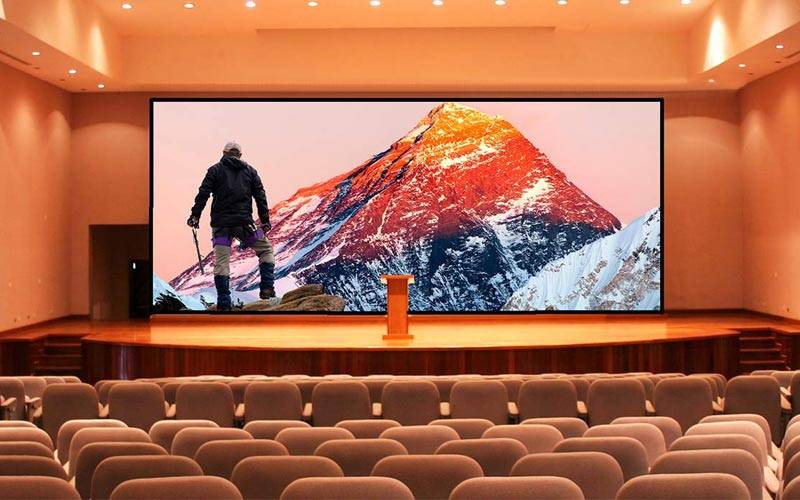
When businesses, educational institutions and organizations plan an indoor LED display, one of the biggest decisions is choosing the right LED technology.
Two technologies commonly considered for professional indoor LED displays are COB (Chip-on-Board) and SMD (Surface-Mount Device).
Both can deliver high-quality visuals, but they are designed differently and may suit different environments. A conference room may prioritize close-up viewing and a refined, seamless appearance, while an auditorium may require a larger display with strong viewing performance from a distance. Control rooms, meanwhile, can have different priorities related to long operating hours, reliability and content visibility.
So, COB vs SMD LED display — which is better?
The answer depends on your room, viewing distance, pixel pitch, content requirements and overall application.
For organizations planning a professional indoor LED wall, Yotech Infocom provides indoor LED wall solutions designed for business, education and professional AV environments, including its COB-based PRO Plus series.
COB stands for Chip-on-Board.
COB LED technology immediately integrates LED chips to the circuit board and covers them, forming a more integrated LED display surface.
This construction can provide a highly refined display surface and is particularly relevant for fine-pitch indoor LED displays designed for close viewing.
COB technology is often considered for applications where visual uniformity, close-range viewing and a premium installation are important.
For example, Yotech's PRO Plus indoor LED wall series is listed as using full COB technology and is positioned for indoor viewing applications.
SMD stands for Surface-Mount Device.
In an SMD LED display, the LED components are mounted onto the PCB using surface-mount technology.
SMD remains a widely used approach for LED video walls and can be suitable for many indoor applications.
The quality of an SMD LED display depends on factors such as:
This is why comparing COB vs SMD only by technology name is not at all enough. The specifications of the complete display should also be considered.
The primary difference lies in how the LED components are packaged and integrated into the display.
|
Feature |
COB LED Display |
SMD LED Display |
|
LED construction |
LED chips mounted directly onto the board and encapsulated |
LEDs packaged as surface-mounted components |
|
Surface appearance |
Highly integrated display surface |
Traditional LED module appearance |
|
Close viewing |
Particularly suitable for fine-pitch, close-view applications |
Suitable for many indoor applications |
|
Pixel pitch options |
Commonly associated with fine-pitch displays |
Available across a wide range of pixel pitches |
|
Application |
Premium indoor, close-view environments |
General indoor LED video wall applications |
|
Maintenance considerations |
Depends on the specific design and service structure |
Depends on module and cabinet design |
|
Best choice |
Applications where close viewing and refined appearance are priorities |
Applications where flexibility and established LED module options are priorities |
There is no universal winner. The right technology depends on the application.
COB vs SMD for Indoor Conference Rooms
Conference rooms are increasingly using large LED displays for video conferencing, presentations, dashboards and collaboration.
In a conference room, people may sit relatively close to the display, which makes pixel pitch and close-view image quality especially important.
Why COB Can Be a Strong Choice for Conference Rooms
COB technology can be attractive when the display will be viewed from relatively short distances.
A premium fine-pitch COB LED wall can provide a highly integrated surface that works well with professional presentation environments.
For boardrooms and executive conference rooms, organizations may also prioritize:
Yotech's indoor LED wall portfolio includes the PRO Plus series with full COB technology, making COB an option to consider for premium indoor environments.
When SMD Can Work Well in Conference Rooms
SMD can also be a practical solution for indoor conference rooms, particularly when the viewing distance is greater, or when the organization is looking for a broader range of LED module configurations.
Instead of choosing COB automatically, consider the actual seating distance, screen size and content being displayed.
COB vs SMD for Auditoriums
Auditoriums create a different set of requirements.
The audience may be positioned at different distances from a large LED wall, and the display may be used for presentations, videos, events, performances and live content.
The important factors include:
COB for Auditoriums
COB can be particularly attractive for premium indoor auditoriums where the audience may have relatively close viewing angles or where a refined fine-pitch LED wall is desired.
For example, high-quality presentation graphics, text and video content can benefit from a display selected with an appropriate fine pixel pitch.
SMD for Auditoriums
SMD LED walls can also be effective in auditoriums, particularly when the audience is farther away and the display does not require an extremely fine pixel pitch.
This can make SMD a practical option where the viewing distance allows a slightly larger pixel pitch.
The key is to select the pixel pitch according to how far the audience is from the display, rather than choosing technology based only on COB or SMD.
COB vs SMD for Control Rooms
Control rooms are among the most demanding indoor display environments.
Operators may spend long periods looking at dashboards, monitoring screens, data feeds, maps and other information.
In these environments, important factors include:
Why Fine-Pitch COB Can Be Considered for Control Rooms
Control rooms often require displays that can show detailed information across a large canvas.
A fine-pitch COB LED wall can be considered when operators are positioned relatively close to the display and need a detailed, seamless visual experience.
However, the display should be selected based on the specific room geometry and operator viewing distance.
When SMD Can Be Suitable
SMD remains a flexible choice for many professional LED applications.
For control rooms with greater viewing distances, an SMD display with the appropriate pixel pitch can provide an effective solution.
Again, pixel pitch and viewing distance matter as much as the LED packaging technology itself.
COB vs SMD: Which Has Better Image Quality?
This is one of the most common questions buyers ask.
It is not accurate to say that every COB display automatically has better image quality than every SMD display.
Image quality depends on multiple factors, including:
However, COB is particularly relevant to applications where fine-pitch, close-view indoor display performance is a priority.
SMD can also deliver excellent image quality when the right pixel pitch, and display specifications are selected.
COB displays are generally designed with an encapsulated LED surface, which can provide additional protection to the LED components compared with conventional exposed component designs.
Actual durability will be determined by a combination of the specific product construction, cabinet design, operating environment and manufacturer.
For professional installations, buyers should evaluate the complete product rather than assuming durability based solely on COB or SMD technology.
For close-view indoor applications, fine pixel pitch is one of the most important considerations.
COB displays are strongly associated with fine-pitch indoor applications and can be an attractive choice for:
SMD can also be suitable where an appropriate fine pixel pitch is available.
The final decision should be based on the actual viewing distance.
Pixel pitch is the distance between the centers of two adjacent LED pixels, usually measured in millimeters.
A smaller pixel pitch means pixels are positioned closer together.
This is especially important for indoor LED displays because people may view the screen from a relatively short distance.
For example:
Closer viewing distance → smaller pixel pitch may be required
Greater viewing distance → larger pixel pitch may be sufficient
Therefore, when selecting an indoor LED wall, do not ask only:
“COB or SMD?”
Also ask:
“What pixel pitch is appropriate for my room?”
How to Choose the Right LED Display for Your Application
For Conference Rooms
Prioritize:
A fine-pitch COB solution can be attractive for premium conference rooms.
For Auditoriums
Prioritize:
Both COB and SMD can be considered depending on the auditorium design.
For Control Rooms
Prioritize:
A fine-pitch indoor LED wall may be appropriate where operators are positioned relatively close to the screen.
Choosing the right LED display is only one part of the project. Organizations also need to consider room design, display size, pixel pitch, installation and overall AV integration.
Yotech Infocom provides LED video wall and professional AV solutions for business and education environments. Its product portfolio includes Indoor LED Wall, Outdoor LED Wall and AIO LED Wall solutions.
For indoor applications, Yotech currently lists multiple LED wall options, including:
Yotech ECO Series
The ECO Series is presented as an all-in-one cabinet design focused on simplified user experience.
Yotech PRO Series
The PRO Series is described by Yotech as a thin indoor LED solution with a hard-wired connection.
Yotech PRO Plus Series
The PRO Plus Series uses full COB technology and is positioned for indoor environments where a refined viewing experience is important.
This range allows organizations to consider different LED technologies and configurations according to their room, viewing distance and application.
There is no single answer for every project.
Choose COB when:
Choose SMD when:
Most importantly, do not choose a display solely because it is labeled COB or SMD. Pixel pitch, viewing distance, screen size, brightness, refresh rate, processing and installation requirements should all be evaluated together.
So, COB vs SMD LED Display which is better for indoor conference room, auditorium and control rooms?
The answer depends on the application.
COB can be a strong choice for premium, fine-pitch, close-view indoor environments, particularly where the display will be seen at short distances and visual refinement is important.
SMD can be an effective choice for many indoor LED wall applications, especially when the room provides greater viewing distance and the project requirements are well matched to an SMD configuration.
For businesses and institutions planning an indoor LED wall, the best approach is to first determine the room size, viewing distance, required pixel pitch, screen dimensions and content requirements, and then select the appropriate LED technology.
With its range of Indoor LED Wall solutions, including COB-based options such as the PRO Plus Series, Yotech Infocom can help the organizations evaluate LED display solutions for professional indoor environments.
Whether you are planning a corporate conference room, auditorium, control room, training space or professional presentation environment, the right LED wall should be selected according to your specific viewing and technical requirements.
Looking for the right COB or SMD indoor LED display for your organization? Explore Yotech Infocom's LED Video Wall solutions and speak with the Yotech team about your conference room, auditorium or control room requirements.
Digital signages enhance communication, engage customers, and provide dynamic content delivery, promoting brand visibility and information dissemination in a visually appealing manner.
Interactive Flat Panels facilitate collaborative learning, interactive lessons, and dynamic presentations. With touch capabilities and multimedia support, they enhance student engagement and learning outcomes.
LED Video Walls deliver vibrant, seamless visuals for impactful presentations, events, and advertising. With high brightness and resolution, they ensure eye-catching displays in diverse environments.
Wireless Presentation Systems enable seamless content sharing, fostering collaboration in meetings. Users can wirelessly connect devices, share content, and enhance productivity with efficient, cable-free presentations.
Audio video Conferencing Systems offer high-quality communication, ensuring clear audio and video for virtual meetings. They foster collaboration, connecting remote teams and facilitating effective communication.
Digital Podiums provide a technologically advanced platform for speakers. With integrated audio-visual features, touch controls, and connectivity options, they enhance presentations, lectures, and public speaking engagements.

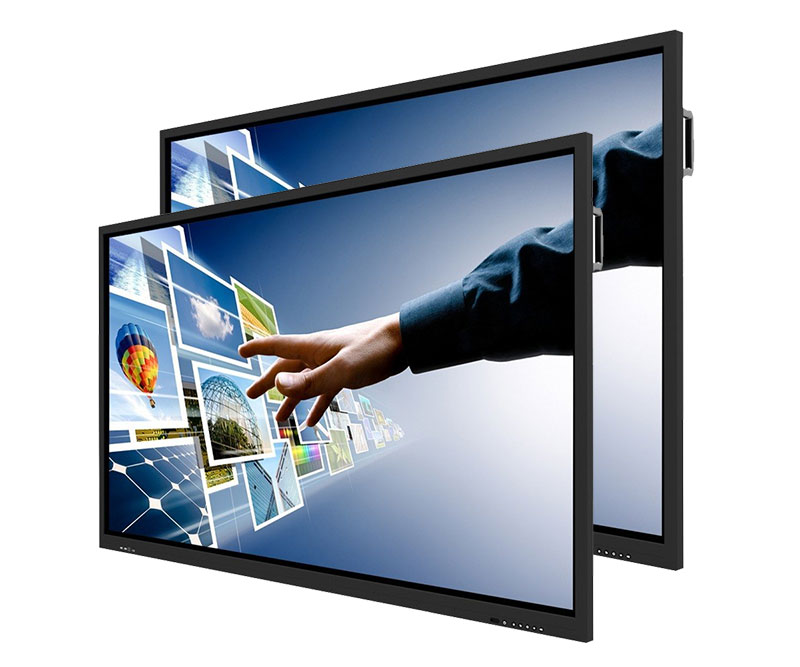
Provide an immersive experience with 4K resolution, up to 40 points of touch, a built-in top-oriented sound bar and microphone array, and a convenient camera USB port location.
| Size: | 86″ |
| Screen Type: | LED |
| Aspect Ratio: | 16:9 |
| Display Area: | 74.61″ x 41.97″ |
| Resolution: | 3840(H) x 2160(V) Ultra HD |
| Pixel Pitch: | 0.4935 mm x 0.4935 mm |
| Back Light Unit: | Direct type LED |
| Response Time: | 6.5 ms |
| Refreshing Frequency: | 60Hz |
| Display Color: | 1.07B (10 bit) |
| Brightness: | 350 cd/m2 |
| Static Contrast Ratio: | 1200:1 |
| Dynamic Contrast Ratio: | 4000:1 |
| Viewing Angle: | 178° |
| Life Time: | ≥50,000 hours |